

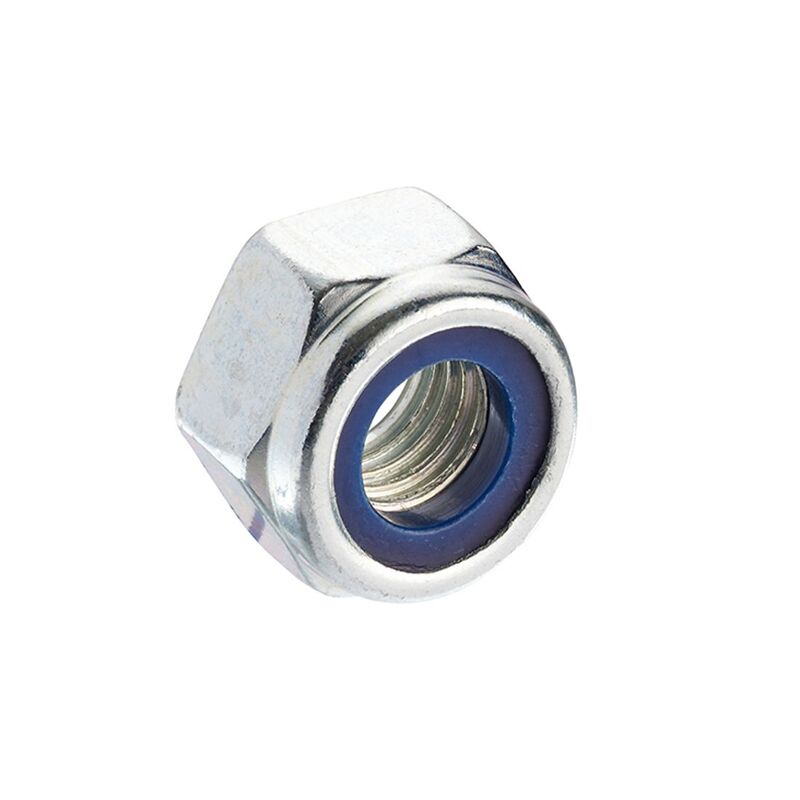


M16 Nyloc Nut Type P DIN 982 Class 8 Bzp
Product Details
Nyloc nuts DIN 982 are class 8 tensile strength are also known as nylon insert nuts. The nylon insert in blue denotes its a standard metric pitch nut. If the insert was black, it usually means its a fine pitch nut and if it had a white nylon insert it is usually an imperial size. Type P nyloc nuts are full height so ideal to give the better strength due its full thread retention. The idea of the nylon insert is that it helps to prevent the nut dis-assembling easily under vibration or through excessive movement. It usually needs tightening all the way down the bolts thread with tools opposed to being freely run like a full plain nut or flange nut. There is usually no need for a spring washer, but its still recomended to have an adequate flat washer to spread the load and to provide a good flat surface for the nut to firmly and squarly fit into position when tightening. Tightening strength and torque is worth checking for critical applications to prevent movement of the material under certain stress conditions.
It is important to get the correct tensile strength to match the bolt or stud being fastened especially in criticle applications. The tensile class is usually stamped on the threaded side of the nut. Having a higher tensile class may not always be suitable on certain applications as movement and stretching of the materials being joined together or the breaking point could be important so always check suitability for specific applications. Once the fastener has been disassembled it’s advisable to replace all components such as the fastener nuts and washers together with the set screws or bolts. The reason is that the fastener over time will experience stretching of the threads of when it was tightened up plus the likely constant movement may cause fractures causing weakness to the fastener.
These are bright zinc plated fasteners which is a preventative measure from corrosion. Avoid breaking into the bright zinc plating usually abbreviated as bzp as this will cause faster corrosion if not covered with a corrosive protected material as in time this will weaken the fastener. Also bear in mind using different materials can cause fusing through corrosion especially in damp conditions when mixed with aluminium or stainless steel materials.
More information is available from Central Fasteners regarding fastener details, but its always worth checking with a manufacturer's specifications or drawings if an alternative size, tensile strength or types of nuts and washers are used.


